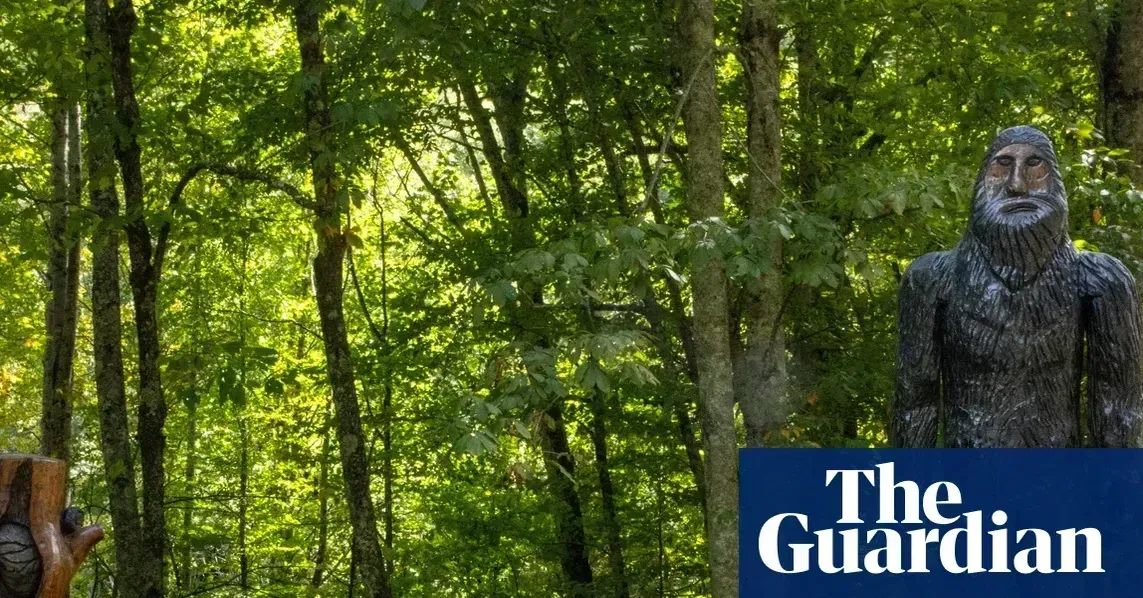
The United States Forest Service has breathed new life into the legend of Sasquatch by releasing a collection of archived reports detailing suspected Bigfoot encounters across Montana and Oregon. These documents, now available in a public archive, range from official biological investigations to local newspaper clippings and personal testimonials. While science has yet to confirm the existence of the elusive bipedal ape, the sudden transparency regarding these historical claims has reignited interest among enthusiasts and skeptics alike.
Among the most detailed entries is a 1982 investigation conducted by wildlife biologist Rodney Johnson in Oregon’s Umatilla National Forest. After creating plaster casts of mysterious tracks, Johnson initially listed several anatomical reasons why the prints likely didn’t belong to a real creature, noting inconsistencies in stride and toe padding. However, his findings remained nuanced; he admitted that if the tracks were indeed a prank, whoever created them possessed an incredible level of detail that would have been nearly impossible to fake without an actual foot cast. Ultimately, the agency dismissed the event as a clever hoax and attempted to close the case.
Other records paint a more atmospheric picture of wilderness dread. A 1980 account from Leo Kinney describes a chilling experience in Montana where he and three companions encountered signs of something unnatural while retrieving an elk carcass. Though they never saw the beast clearly, Kinney described pungent odors, guttural grunting sounds, and a creature capable of dragging heavy prey on two legs—an encounter that left the men shivering with fear. This narrative mirrors more recent events from 2003 in Montana’s Clark Fork Valley and current reports coming out of rural Ontario, Canada, where residents claim to have seen massive figures raiding trash bins.
These disclosures highlight a deep human fascination with the unknown that persists despite a lack of empirical evidence. According to Josh Redstone, a philosophy professor at Carleton University, the allure of Bigfoot lies in the thrill of potential discovery. With over sixteen thousand reports currently logged by the Bigfoot Mapping Project, each new government file serves as another piece of a sprawling cultural puzzle that refuses to stay buried under forest debris or bureaucratic red tape.